
Highlights
Relaxation seeps into your body as you ease into the second-largest hot spring in Canada. Liard River Hot Springs provides relief to Alaskan bound travellers after a long day on the road.

A Natural Wonder in the Wild
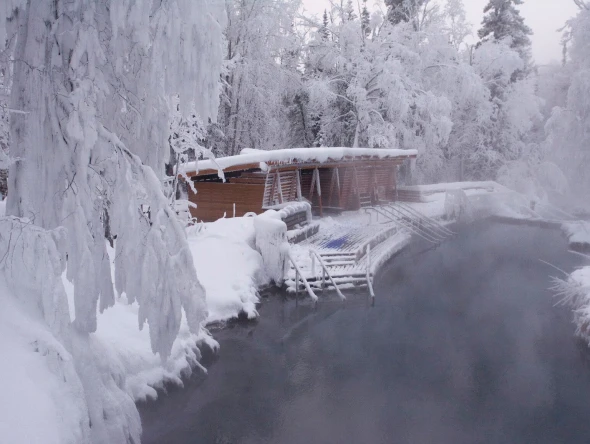
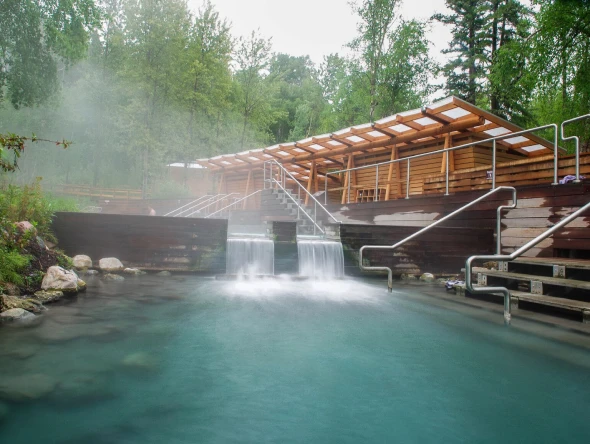
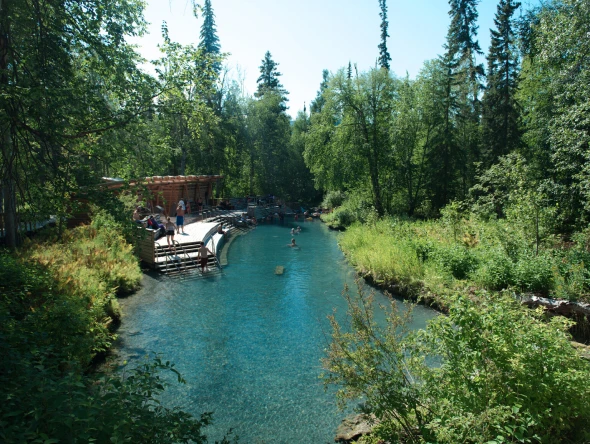
The hot springs complex is of national ecological significance and is well known for its natural setting in a lush boreal spruce forest. The park is such a popular stopover for tourists that the campground fills up early each day during the summer months. Liard is also open year-round.
The Soothing Alpha Pool
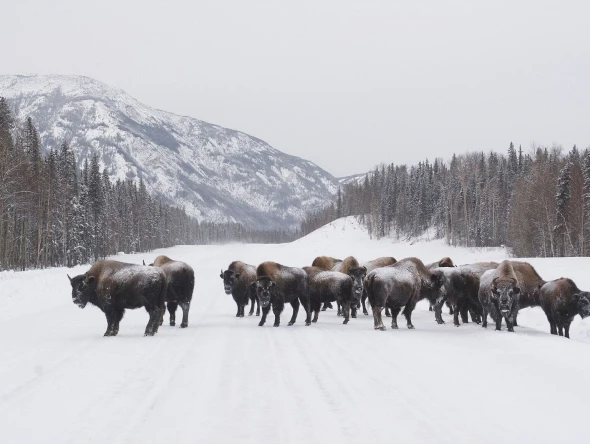
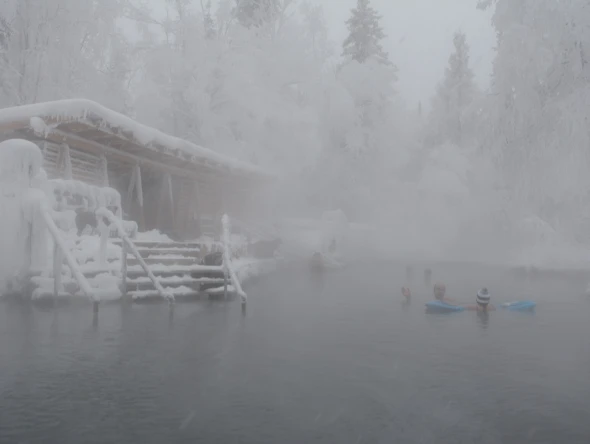
There is a hot spring open to the public called Alpha pool with water temperatures ranging from 42 °C to 52 °C. Facilities include a change house and composting toilet. A boardwalk, which leads to the hot spring pools, passes through a warm water swamp and boreal forest that supports rich and diverse plant communities as well as mammal and bird species.
Protect the Beauty Around You
Watch a short video of the scenic views at Liard River Hot Springs park.
Know Before You Go
Electric wildlife fence
Liard River Hot Springs Park is the first provincial park to have an electric fence installed. We will be keeping visitors and wildlife safe by reducing the amount of human-wildlife interactions at the park.
Safety Information
User Fee
From May 1 to September 30, there is a day-use fee of $5 for adults, $3 for children or $10 for families. Annual passes cost $10 for adults and $20 for families.
Visitors can pay at the staffed gatehouse, which also functions as a local visitor centre. The funding will go toward increased services and staff presence. The fees also help to cover the park’s maintenance costs, which are high due to weather variances and heavy use. Fees are payable in cash, credit, or debit, at the park.
Review the detailed guides under visit responsibly for more information on staying safe and preserving our natural spaces.
Visit Responsibly
Follow these guides to ensure your activities are safe, respectful, and ecologically friendly:

Reservation Policies
Get information on:
Maps and Location
Getting there
This park is located at kilometre 765 of the Alaska Highway, approximately 60km north of Muncho Lake Park.
Camping
Frontcountry Camping
This park offers vehicle-accessible campsites.
Campsite reservations are accepted and first come, first served sites are also available. Camping fees are payable in cash only at the park.
Vehicle-accessible camping fee: $26.00 per party per night
BC senior’s rate (day after Labour Day to June 14 only): $13.00 per senior party per night. Read the user fees policy for information on senior camping discounts.
The winter camping rate is charged from the Tuesday after Thanksgiving to April 30 and the campground has reduced services during this time.
Gallery
Frontcountry Campgrounds
Liard River Hot Springs Campground

Operating season

Reservations

Winter rate
Number of campsites
Vehicle-accessible sites: 53

Winter Camping
Winter vehicle accessible camping fee: $16 per party per night
The winter camping rate is charged from the Tuesday after Thanksgiving to April 30 and the campground has reduced services during this time.
Things To Do

Facilities
About This Park
Historical themes at Liard River Hot Springs include First Nation use of the area, the fur trade, geological survey exploration, settlement by pioneers, and construction of the Alaska Highway.
Early Life Along the Liard
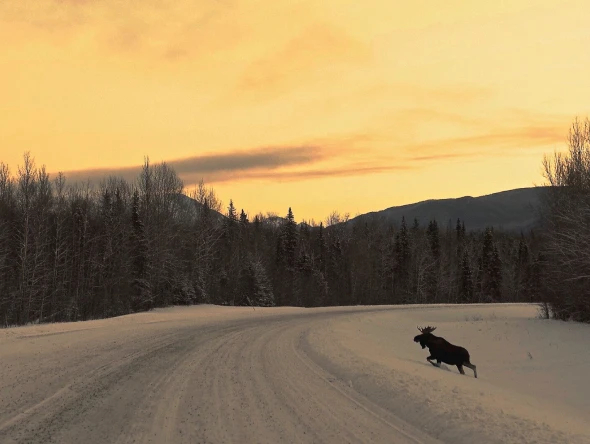
The Liard region was home to people speaking the Athapaskan and Kaska tongues, with original groups including the Beaver, Sikanni, Nahanni, and the Dog Rib. Moose was a mainstay of these peoples, and they travelled the rivers of the region by canoe. Following the arrival of white man, native use became closely linked to the fur trade and exploration work.
First Recorded Discovery of the Springs
The first written recording of the hot springs on the Liard River was made in 1835 by Robert Campbell of the Hudson’s Bay Company. Following Campbell’s exploration, the Liard River was used as a trading route to the Yukon. The rapids along the upper Liard River were so treacherous that this route was abandoned in 1870.
Scientific Exploration Begins
The first scientific exploration of the Liard region was undertaken in 1887 by R. C. McConnell for the Geological Survey of Canada. William Ogilvie further explored the Liard in 1888 and 1889 and his party camped at Liard Hot Springs on both expeditions.
A Prospector’s Story and Survival
The first white man to live at Liard River Hot Springs was Tom Smith, a prospector in the Klondike Gold Rush, who built and lived with his daughter in a cabin by the Alpha pool in the early 1920s. They left the area after two years of trapping; on their way to Fort Liard, Tom was drowned in the Liard River, while his daughter was rescued by some local First Nations people, and sent to the Anglican mission at Hay River.
From Wartime Route to Protected Landmark
The Japanese thrust to Alaska and the allied commitment to supply war materials to the Soviet Union spurred construction of the Alcan Military Highway (Alaska Highway). The 1,600 miles of highway was construction by 10,000 American Army Engineers and 6,000 civilians. The first boardwalk and pool facilities were built by the American Army in 1942. Liard River Hot Springs Park was created in April 1957.

Reconciliation with Indigenous Peoples
BC Parks honours Indigenous Peoples’ connection to the land and respects the importance of their diverse teachings, traditions, and practices within these territories.
This park webpage may not adequately represent the full history of this park and the connection of Indigenous Peoples to this land. We are working in partnership with Indigenous Peoples to update our websites so that they better reflect the history and cultures of these special places.